Studio notes How the work is made
Etching, lithograph, collograph: what the words under a print mean
Under each of Pauline's prints is a line such as "Lithograph & woodcut". What each of those techniques is, and why she combines them.
2 min read
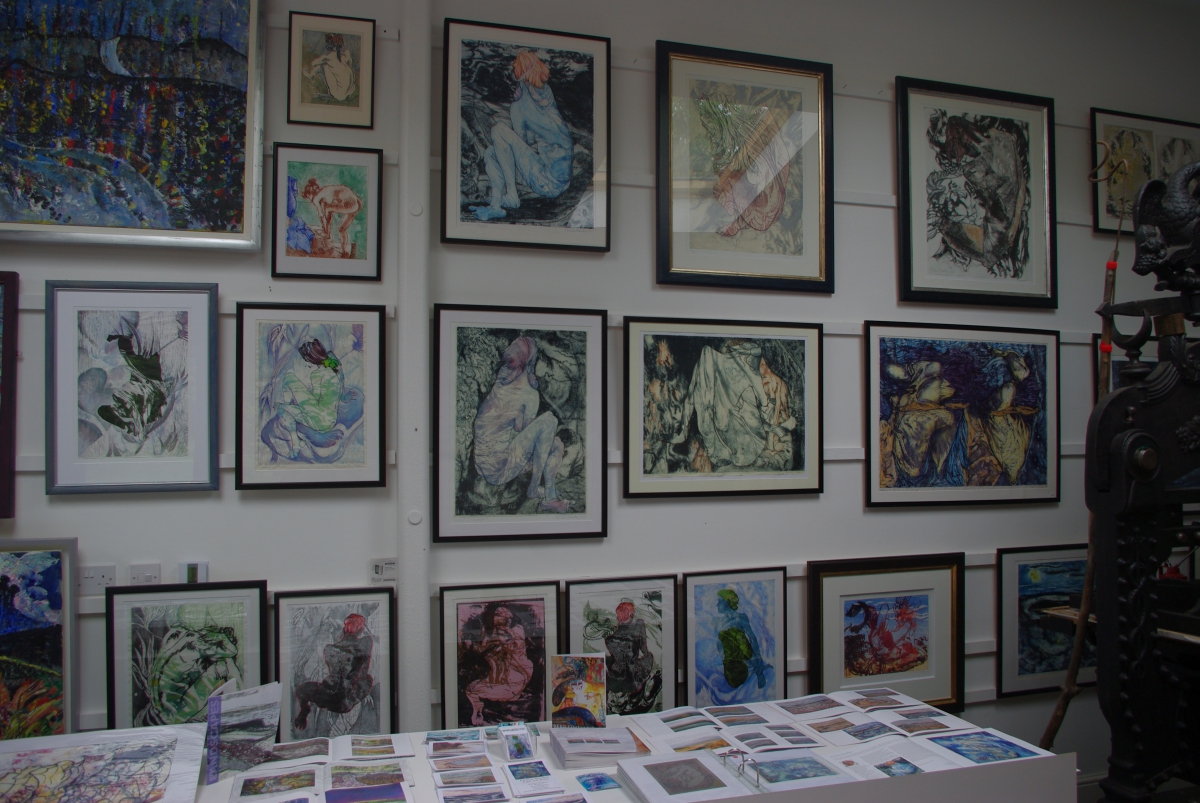
Every one of Pauline's prints on this site has a short line under its title: "Etching & collograph", "Lithograph & woodcut", "Monoprint". Those words tell you how the print was made, and so a good deal about how it will look and feel on the wall. Here is what each one means.
Relief: woodcut and linocut
In a relief print the artist cuts away everything that should stay white, and inks the surface that is left. A woodcut is cut into a plank of wood, a linocut into lino. The paper is laid on the inked block and pressed, by hand or in a press. Relief prints have strong, flat areas of colour and you can often see the grain of the wood in them.
Intaglio: etching
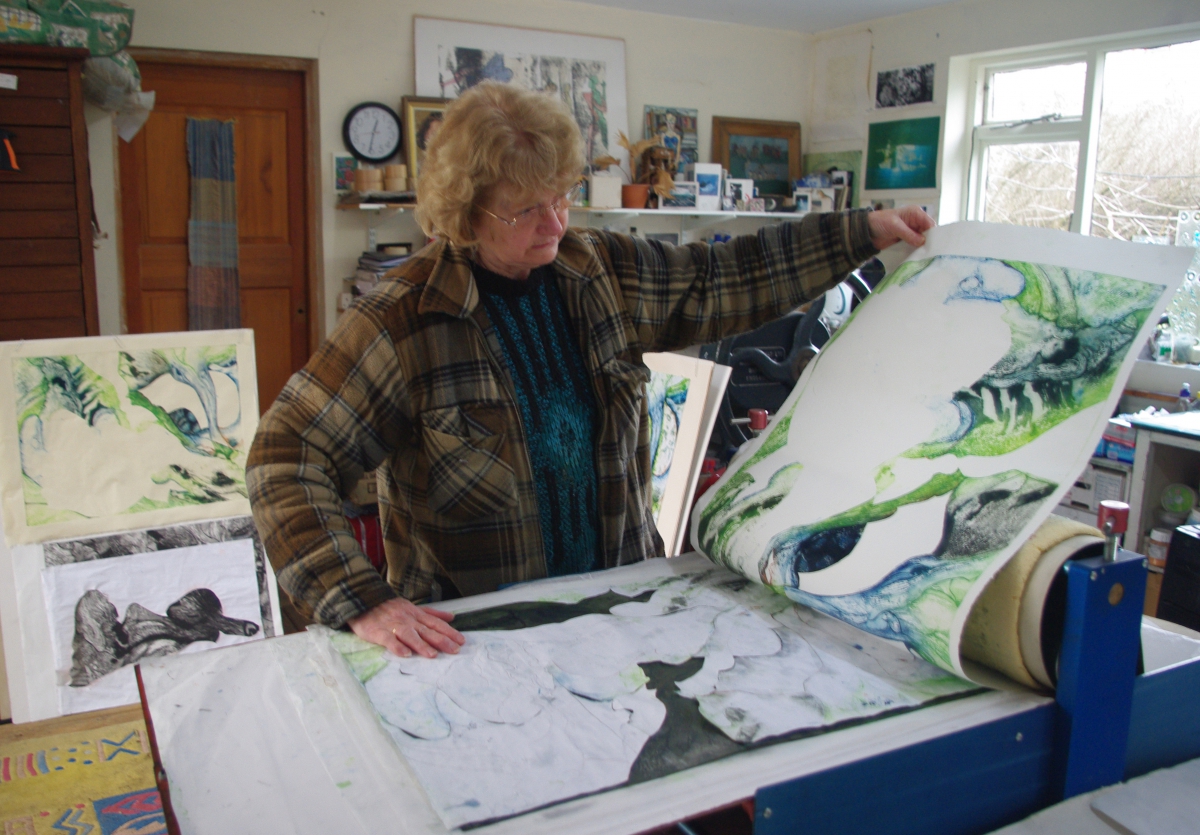
Intaglio works the other way round. The lines are cut or bitten into a metal plate, the plate is inked and wiped clean, and the ink stays only in the lines. Damp paper is pushed into them under great pressure. An etching usually has a fine, drawn quality, and a plate mark: the dent where the edge of the plate pressed into the paper.
Planographic: lithograph
A lithograph is printed from a flat surface, traditionally a stone, now often a plate. It works because grease and water do not mix: the drawn areas hold the greasy ink and the rest, kept damp, refuses it. Lithographs keep the softness of a crayon or brush mark.
Collograph
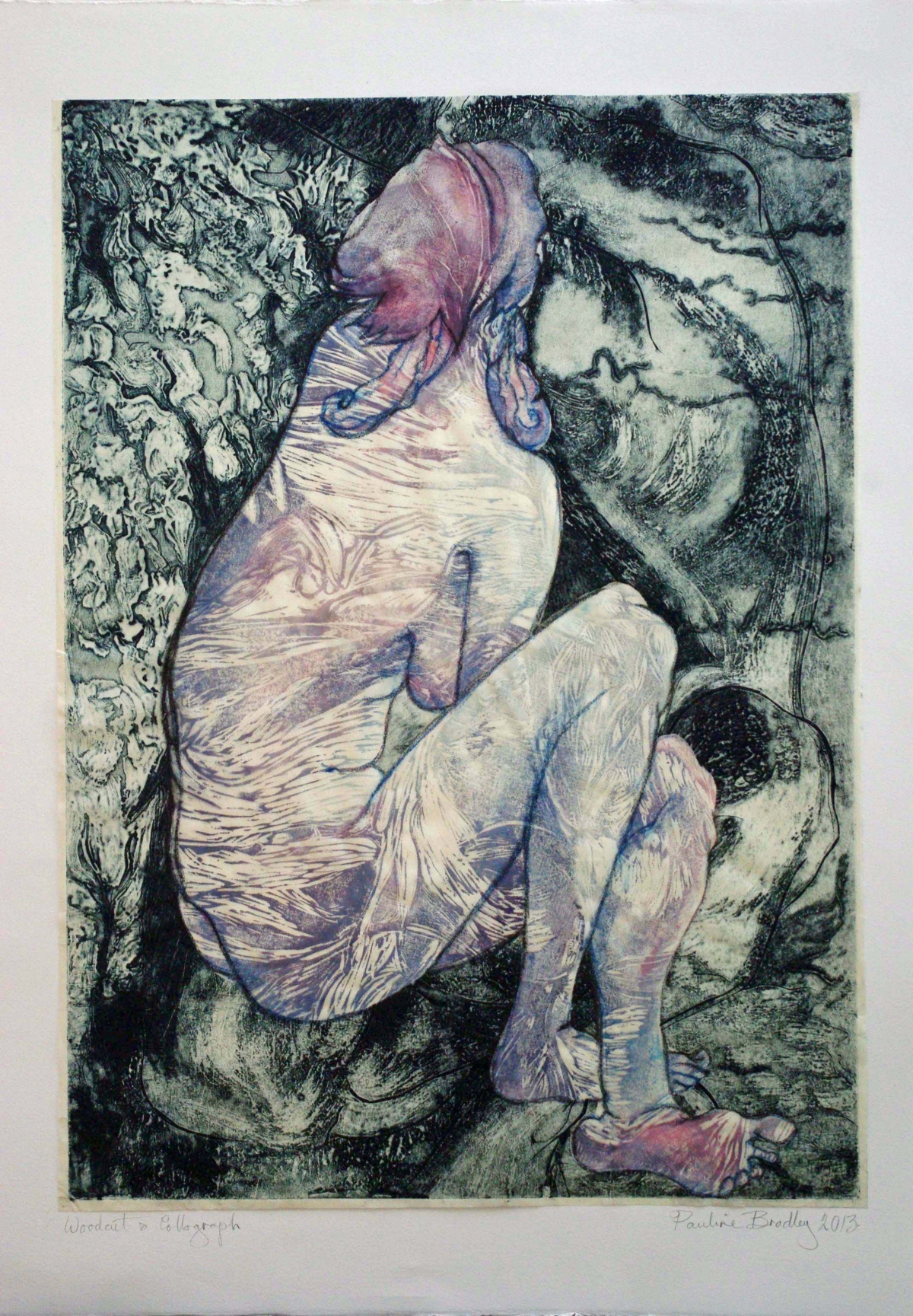
A collograph (also spelt collagraph) is printed from a plate built up like a collage: textured materials glued to a backing board, sealed, then inked. It can be printed as relief, as intaglio or both, and it gives rich, deep textures that no other method quite does.
Monoprint, screenprint and takuhon
A monoprint can only be printed once, so every one is unique. A screenprint is made by pushing ink through a fine mesh, with a stencil blocking the areas that stay clear, and gives clean, bright colour. Takuhon is a Japanese way of taking a print by rubbing: damp paper is laid over a surface and ink is dabbed on to pick up its texture.
Why two techniques at once?
Pauline uses a range of traditional and contemporary printing media, often combining more than one technique on a single sheet. A print listed as "Lithograph & woodcut" has been through the press more than once: perhaps a soft lithographic drawing of the figure, then a woodcut over it for the strong shapes of rock or water. Each layer has to line up with the one before, which is a large part of the skill.
If you would like to know more about how a particular print was made, or about its paper, ask us on its page. We are always happy to talk about it.
See the prints
Every print by Pauline Bradley, with the ones still available first.
Pauline Bradley's prints